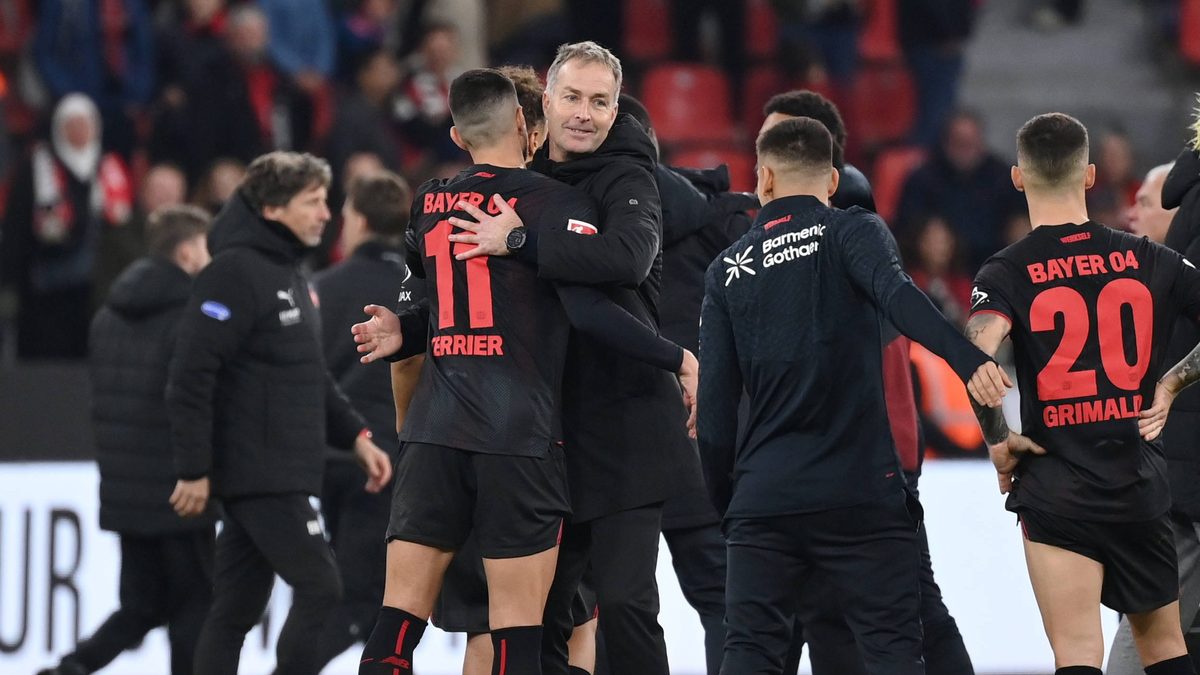
The Curious Case of Missing Hjulmand Bundesliga Improvement Data
In today's hyper-connected world, where information is seemingly just a search query away, it can be perplexing to encounter significant data gaps on topics of interest. One such enigma that has recently come to light for researchers and football enthusiasts alike is the scarcity of readily available, comprehensive data regarding "hjulmand bundesliga improvement." Despite the widespread interest in coaching methodologies and performance analytics, a deep dive into common online sources often reveals a notable absence of direct, analyzed information on Kasper Hjulmand's impact on player or team improvement specifically within the German Bundesliga.
This isn't to say that Kasper Hjulmand's coaching career lacks documentation. Far from it. Hjulmand is a respected figure in European football, particularly known for his successful tenure with the Danish national team, guiding them to a memorable semi-final appearance at Euro 2020. His philosophical approach to the game, emphasis on player development, and tactical acumen are often lauded. However, when the specific lens is applied to his time in the Bundesliga and a search is conducted for concrete "improvement data," the results are surprisingly sparse. This article delves into the potential reasons behind this fascinating data vacuum, offering insights into why this specific information might be elusive and how one might approach such a research challenge.
The Elusive Nature of "Hjulmand Bundesliga Improvement" Data
The quest for specific data like "hjulmand bundesliga improvement" often leads to a striking realization: not all information, even on prominent figures, is equally indexed or widely available. Several factors could contribute to why concrete, analyzed data on Hjulmand's improvements in the Bundesliga might be difficult to locate through typical search channels:
- Brief and Challenging Tenure: Kasper Hjulmand's primary stint in the Bundesliga was with Mainz 05, from May 2014 to February 2015. This was a relatively short period, and while he aimed to continue Thomas Tuchel's successful work, the team experienced mixed results, culminating in his dismissal. A short, less overwhelmingly successful period naturally generates less "improvement data" for widespread historical analysis compared to a longer, more stable, or highly triumphant tenure. Media coverage often focuses more on immediate results and managerial changes rather than deep, long-term analytical dives into player development under a coach who was in charge for less than a year.
- Specificity of the Search Term: The phrase "improvement data" itself is quite specific. While journalists and analysts might discuss a team's tactical evolution, individual player form, or league position changes, they might not always aggregate this into a distinct category labeled "improvement data" that is easily searchable. Instead, the information might be embedded within match reports, season reviews, or interviews, requiring significant manual extraction and interpretation.
- Focus of Hjulmand's Legacy: Hjulmand's most recognized and celebrated work has been with the Danish national team, where his impact on team cohesion, tactical identity, and overall performance is unequivocally clear. This success naturally overshadows his earlier, shorter club stints, especially those that weren't marked by significant trophy wins or prolonged periods of success. Consequently, the bulk of analytical content and retrospective pieces tend to focus on his Danish achievements, making Bundesliga-specific analyses harder to find.
- Language and Geographic Barriers: While the Bundesliga is a global league, much of the detailed, in-depth analysis of coaches and teams, particularly from a specific period, might predominantly exist in German-language sports media, club archives, or local fan forums. English-language sources might offer summaries but lack the granular data points sought when researching "improvement data."
- Lack of Publicly Indexed Analytical Studies: Professional clubs often conduct internal analytics on player and team improvement under different coaching staff. However, this proprietary data is rarely, if ever, made public. For external researchers, specific studies on "hjulmand bundesliga improvement" would need to be conducted by independent analysts or academic institutions, and if such studies exist, they might not be widely indexed or freely accessible.
This challenge of finding specific details highlights broader issues in online research, as explored in Searching for Hjulmand Bundesliga Improvement: Context Gaps Revealed. It's a reminder that even with vast digital resources, targeted information can remain elusive.
What We Can Infer When Direct Data Is Absent
The absence of readily available "hjulmand bundesliga improvement" data doesn't necessarily mean there was no impact or no improvement during his tenure. Rather, it signifies that this particular aspect of his coaching career hasn't been a prominent subject of widespread analytical reporting or easy aggregation in publicly accessible databases. When faced with such a data void, several inferences can be drawn, and alternative research strategies become crucial:
- The Need for Critical Interpretation: Instead of concluding that no improvement occurred, researchers must understand that the data simply isn't aggregated or presented in the requested format. It requires a more nuanced approach to piece together potential insights.
- Broaden Your Search Horizon: The initial search query might be too narrow. Instead of directly seeking "improvement data," one might look for related metrics and qualitative assessments. This could include articles discussing Mainz's performance before, during, and immediately after Hjulmand's tenure, player interviews from that period, or tactical breakdowns by sports journalists.
- Focus on Indirect Indicators: If direct improvement metrics aren't available, indirect indicators can offer clues. For example, did any key players at Mainz significantly develop or move to bigger clubs shortly after playing under Hjulmand? Were there noticeable shifts in playing style or tactical philosophy that garnered specific commentary?
- Acknowledge Limitations: It's important to acknowledge that without direct, quantifiable "improvement data," any conclusions drawn will be more inferential and less definitive. This is a common challenge in historical sports analysis where granular data was not always collected or made public.
For an ongoing look into this very search challenge, you might find insights in No Hjulmand Bundesliga Improvement Found: A Content Search Update, which further explores the difficulties in pinpointing this specific data.
Strategies for Deeper Research into Coaching Impact
When direct "hjulmand bundesliga improvement" data proves elusive, a multi-faceted research approach is essential. Here are actionable strategies to uncover insights into a coach's impact, even when specific "improvement data" isn't explicitly categorized:
Defining "Improvement" in Football Coaching
Before diving into research, it's vital to define what "improvement" actually means in the context of football coaching. This isn't always a single metric; it can encompass various aspects:
- Statistical Improvement:
- League Position: Did the team's standing in the Bundesliga improve or stabilize compared to prior seasons?
- Points Tally: Did they accumulate more points over a comparable period?
- Goal Difference: Was there an improvement in goals scored vs. conceded?
- Win/Loss/Draw Record: How did their overall match results compare?
- Specific Player Metrics: Did individual players show better passing accuracy, increased goal contributions, or improved defensive stats under his guidance?
- Tactical/Philosophical Improvement:
- Was there a clear development in the team's playing style (e.g., more possession, higher pressing, better defensive organization)?
- Did the team become more adaptable to different opponents or game situations?
- Player Development & Market Value:
- Did younger players get more opportunities and seemingly grow in stature?
- Did the market value of key players increase significantly during his tenure?
- Team Cohesion & Morale:
- Were there reports of improved team spirit, a positive dressing room atmosphere, or better player relationships?
Practical Research Steps
- Consult Official Club Archives & Historical Data:
- Visit the official website of 1. FSV Mainz 05 (the club Hjulmand managed in the Bundesliga). Look for historical archives, season reviews (for 2014-2015), or news releases from that specific period. These might contain summaries of performance, managerial statements, and player comments.
- Access the official Bundesliga archives. These databases often contain detailed match statistics, league tables, and sometimes even player performance data season by season. You would need to compare Mainz's performance metrics before, during, and after Hjulmand's time.
- Leverage Specialized Football Databases:
- Transfermarkt.com: This site provides extensive data on player market values, transfer histories, and detailed managerial statistics including points per game, win percentages, and specific match results for every manager at every club. While it won't explicitly say "improvement data," you can compare Hjulmand's Mainz statistics with those of his predecessor and successor.
- Soccerway / ESPN / BBC Sport Archives: Major sports news outlets often maintain detailed historical records of league tables, match reports, and player statistics for top leagues. Search their archives for Mainz 05 during the 2014-2015 season.
- Dive into Journalistic Archives and Sports Media:
- Search major German sports publications (e.g., Kicker, Bild Sport, Frankfurter Allgemeine Zeitung - FAZ) for articles published between May 2014 and February 2015 concerning Mainz 05 and Kasper Hjulmand. Use German search terms like "Kasper Hjulmand Mainz 05 Entwicklung" (development), "Mainz 05 Leistungen Hjulmand" (performance), or "Spielerentwicklung unter Hjulmand" (player development under Hjulmand).
- Look for English-language analyses from that period in international sports media. While less granular, they might offer summaries or perspectives on his impact.
- Explore Interviews and Biographies:
- Search for interviews with Kasper Hjulmand himself, or with players who played under him at Mainz 05. They might reflect on the tactical changes, training methods, or overall atmosphere during his time, providing qualitative insights into "improvement" or challenges.
- Any biographies or in-depth profiles of Hjulmand might briefly touch upon his Bundesliga experience.
- Utilize Academic Search Engines:
- While less likely for specific manager improvement data, academic databases (e.g., Google Scholar, JSTOR, SportDiscus) sometimes contain studies on tactical trends, coaching methodologies, or player performance in the Bundesliga. If a study covers the specific period, it might offer relevant data points.
By meticulously combining these strategies, researchers can construct a more complete picture, even in the absence of neatly packaged "hjulmand bundesliga improvement" data.
Conclusion
The pursuit of "hjulmand bundesliga improvement" data exemplifies a common challenge in digital research: the absence of direct, aggregated information on a specific topic. This isn't necessarily an indictment of Kasper Hjulmand's coaching abilities or a definitive statement on his Bundesliga tenure, but rather a reflection of how information is indexed, prioritized, and disseminated across the internet. His relatively short and less prominent stint at Mainz 05 means that comprehensive, easily accessible "improvement data" is often overshadowed by his more celebrated achievements elsewhere.
For those genuinely seeking to understand Hjulmand's impact in the Bundesliga, the path forward requires strategic, multi-faceted research. By broadening search queries, delving into historical archives, utilizing specialized football databases, and interpreting qualitative journalistic accounts, one can piece together a narrative of his time and potential influence. The journey to uncover specific "improvement data" might be more akin to detective work than a simple keyword search, but it ultimately yields a deeper understanding of both the subject matter and the intricacies of online information retrieval.